Stop Carrying Last Year's Money Mistakes Into Your Future
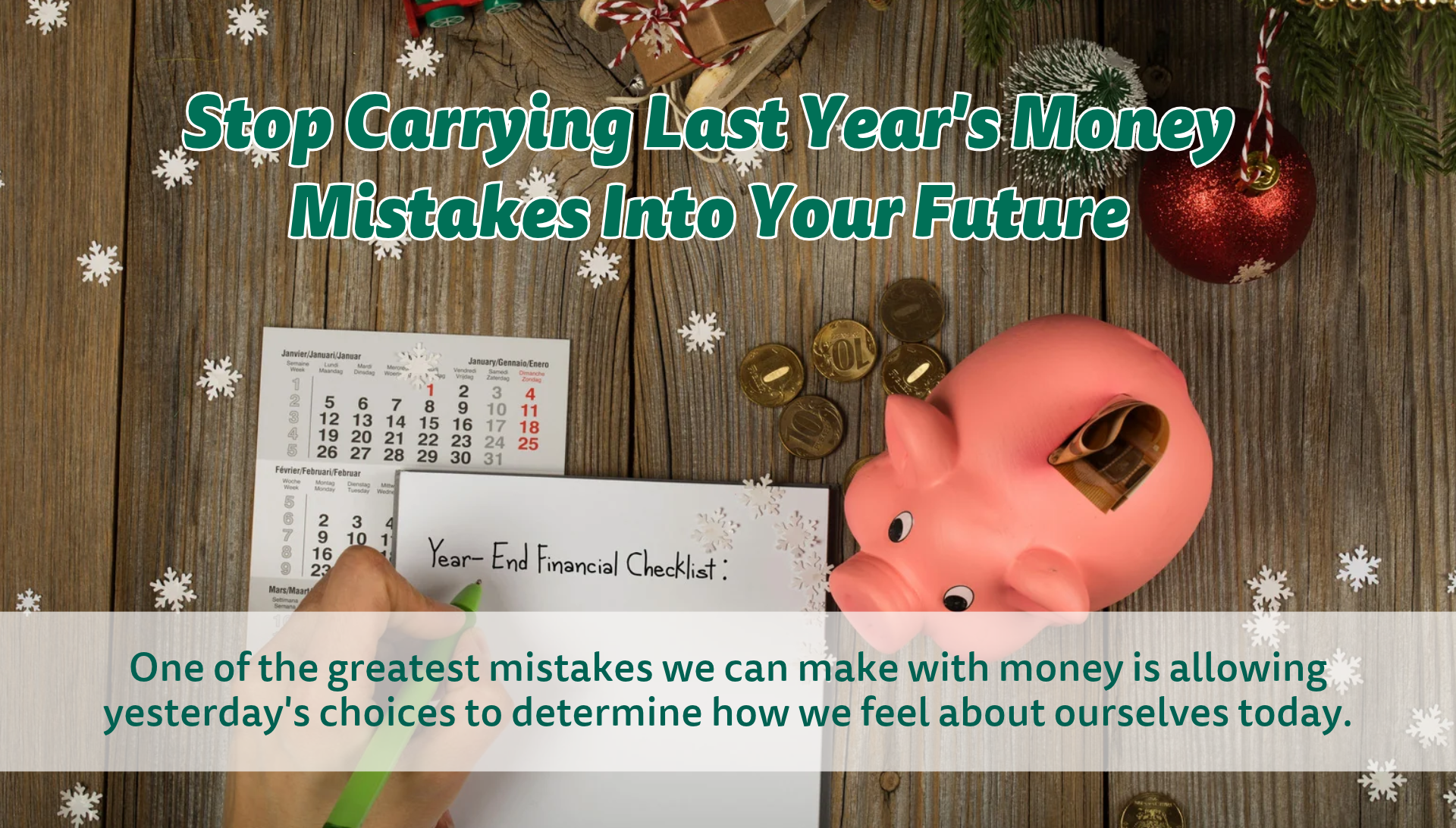
As we move toward the end of another year, this is often the time when we start taking inventory.
What went right?
What didn't?
What did we accomplish?
And what happened that we never saw coming?
The same thing happens with our money.
Maybe this year didn't go according to plan.
Maybe you saved less than you intended.
Maybe debt increased.
Maybe an unexpected expense knocked you sideways.
Maybe your career or income changed.
Or maybe you had an incredible financial year, accomplished many of your goals, and now you're wondering:
What's next?
Wherever you find yourself today, I want you to remember something:
Your current financial reality is not your financial destiny.
Your Past Doesn't Get to Make Your Next Decision
One of the greatest mistakes we can make with money is allowing yesterday's choices to determine how we feel about ourselves today.
We carry guilt.
We carry shame.
We beat ourselves up over decisions we wish we had made differently.
And sometimes we simply avoid looking at our finances altogether because facing the numbers feels too uncomfortable.
But judgment doesn't create transformation.
Awareness does.
Your financial life is constantly giving you information.
Instead of judging what happened this year, get curious about it.
What worked?
What didn't?
When did you make financial decisions from fear?
When did you make choices that genuinely supported the life you wanted to create?
Were there moments when spending made you feel better temporarily but created stress later?
Did fear cause you to hold onto something: a job, a lifestyle, an investment, or even a belief about money that no longer served you?
And perhaps most importantly:
What did your relationship with money teach you about yourself this year?
That's where financial empowerment begins.
Not with perfection.
With awareness.
Four Steps to Finish the Year Financially Empowered
Before you start making resolutions for next year, I invite you to do something different.
Give yourself a little quiet time and walk through these four steps.
1. Acknowledge
Look at your financial reality exactly as it exists today.
Not where you think you should be.
Where you actually are.
Look at your savings, debt, cash flow, investments, spending, and financial commitments.
Take the emotion out of the numbers for a moment.
There is no blame here.
No shame.
No guilt.
No judgment.
There is simply information.
And information gives you the power to choose what happens next.
2. Release
Ask yourself:
What am I ready to stop carrying into another year?
Maybe it's debt.
Maybe it's overspending.
Maybe it's constantly comparing your financial life to someone else's.
Maybe it's the belief that you'll never have enough.
Or perhaps it's an old money story you inherited long ago that doesn't belong in the life you're creating today.
You don't have to solve everything before December 31.
But you can decide what you're no longer willing to keep repeating.
3. Desire
Now forget about the numbers for a moment.
Ask yourself:
What do I actually want my life to look and feel like next year?
Who do you want to spend your time with?
What experiences do you want to have?
How do you want to feel when you wake up in the morning?
What would greater financial freedom allow you to change?
This is where I want you to get out of your head for a moment and listen to your heart.
Don't immediately start negotiating with yourself about why something isn't possible.
Just listen.
Your heart may be telling you something you've been too busy to hear.
4. Act
Awareness without action doesn't change our lives.
So choose one financial action you can take before the end of the year that supports the life you just envisioned.
Not ten things.
One.
Pay down a debt.
Increase an automatic savings contribution.
Review where your money is actually going.
Revisit your financial plan.
Have the money conversation you've been avoiding.
Schedule time with your financial professional.
Whatever it is, choose something meaningful and do it.
One intentional action begins changing your relationship with money from something that happens to you into something you consciously participate in creating.
Building Wealth From the Inside Out
I've spent much of my career exploring why incredibly intelligent and successful people can know exactly what they're supposed to do financially and still struggle to do it.
The answer is that money isn't only mathematical.
It's emotional.
In The Emotions Behind Money, I explored the emotions behind our financial choices and why understanding our internal patterns is essential if we want to change our external financial reality.
Years later, in The 4 Spiritual Laws of Money, I went even deeper into that journey, exploring desire, the wisdom of the heart, intention, and ultimately action.
Because creating real wealth isn't simply about accumulating more.
It's about creating a life that feels abundant financially, emotionally, mentally, physically, and spiritually.
You Don't Need January 1
There's something beautiful about a new year.
It feels like a clean slate.
But you don't need to wait for the calendar to give you permission to change your financial life.
You don't need January 1.
You don't need the perfect plan.
And you certainly don't need to have everything figured out.
You simply need the courage to look at where you are today, decide where you want to go, and take the next intentional step toward it.
Whatever happened financially this year has already happened.
Take the lesson.
Leave the judgment.
And choose what comes next.
Because your financial story isn't over.
You're still writing it.
Much love,
Julie
P.S. Financial empowerment isn't about having everything perfectly organized. It's knowing that regardless of where you've been, you still have the power to make a different choice today.
And sometimes one different choice is where an entirely different financial future begins.
Share Blog On Social



Recent Blogs



Similar Blogs